


































Following a rubber seal from the sample to the production lot
Keep the drawing, compound reference and production-lot records connected when tracing a rubber sealing ring.
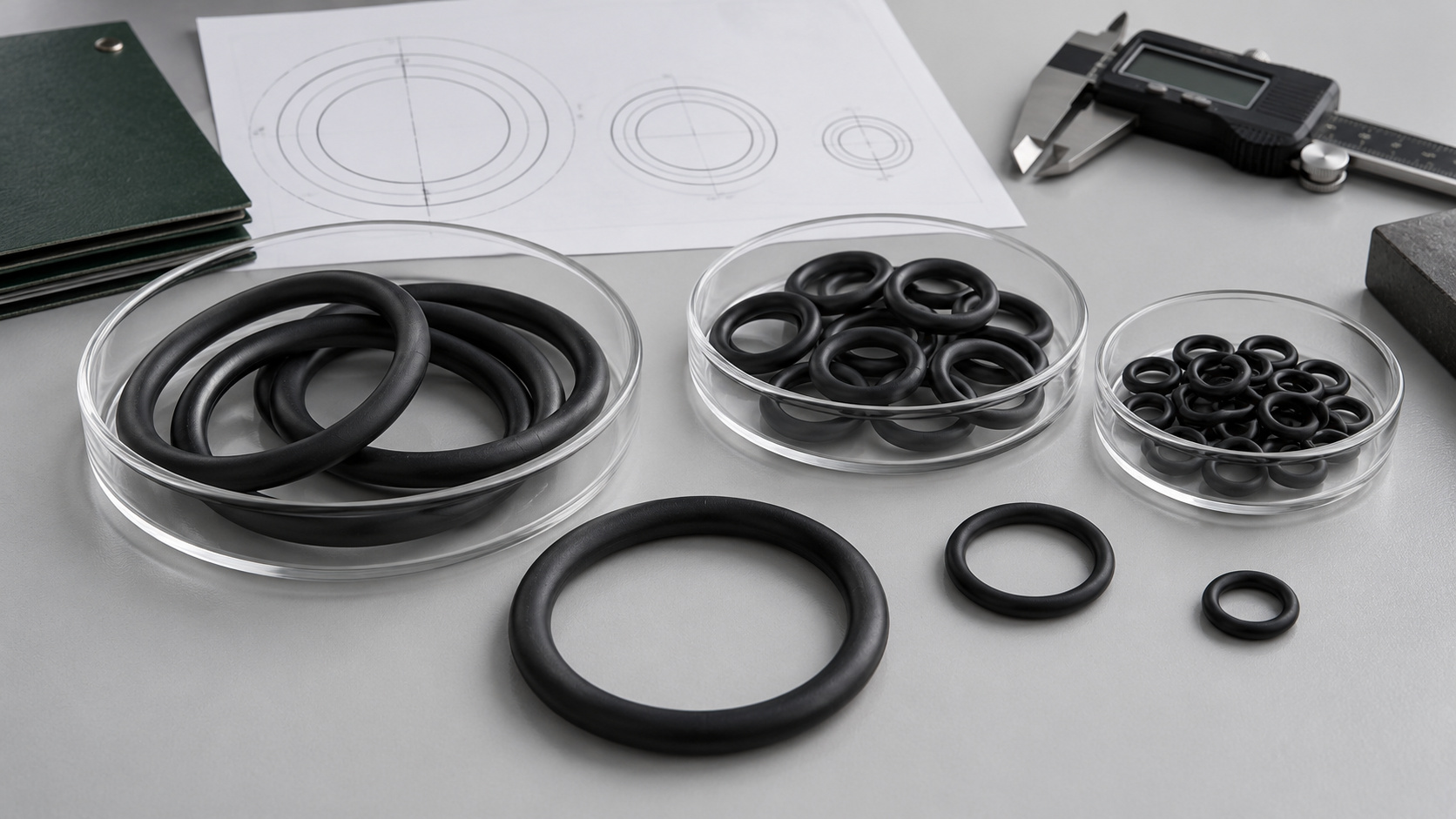
A bag of black sealing rings is a poor starting point for identifying where or how the parts were made. I would start with the ring on the table and ask the supplier which drawing and compound reference produced it. Then I would ask where the moulding was done and how the finished bag connects to that run. The address on the quotation would stay in the business file; these answers would go with the sample.
I would begin with the actual ring being quoted. Give the drawing a reference and a revision. Identify which dimensions are being checked and which material designation belongs to that version. If two similar-looking rings are on the table, keep their references apart. The point is to be able to explain which sample the supplier has agreed to reproduce.
Next comes the material description. “Black rubber” tells the receiving team what it can see; it does not identify a compound. Ask for the compound reference used for the sample and the evidence available for it. Let the responsible technical person review suitability for the intended application. I would not infer chemical compatibility from colour, or from a statement that another customer uses something similar.
Then ask who performs each production step. A supplier may coordinate work from more than one facility. I would want the moulding location, any outside finishing and the final inspection location identified for this order. I would put each named facility beside the step it will perform, with a contact or document reference for the answer. If the moulding is to move, I would put the proposed new location in the order file and ask which sample and production checks need doing again.
For a repeat enquiry, I would take out the first order's sample reference before reading the new offer. I might find the drawing number unchanged but a different compound written beside it. I would circle the different reference and ask what the new quotation is offering. The old and new compound information would go to the responsible technical reviewer before I accepted the substitution. Keeping a familiar drawing number does not by itself describe the material in the next bag.
At the finished-goods stage, I would look for a practical link from the bag or carton identifier to the supplier's lot record. Ask for an example of that link before agreeing the labels. The receiving team needs to distinguish this drawing revision and material reference from other rings arriving together. I would ask the supplier to take one example carton number and show the record it leads to.
Regional directories can help locate possible production capabilities. I would ask a business found in a directory about its actual sealing-ring work, rather than write the directory's city into the product specification. The drawing, sample and proposed production route would still need their own answers.
The resulting file can be quite small: the drawing revision, approved sample, compound reference, agreed production route and labelled-lot record. Together they let a buyer follow this seal through an order. A supplier brochure can remain in the file too, but it cannot do the job of those linked references.
Share the product, specifications, quantity and destination to discuss sourcing options.