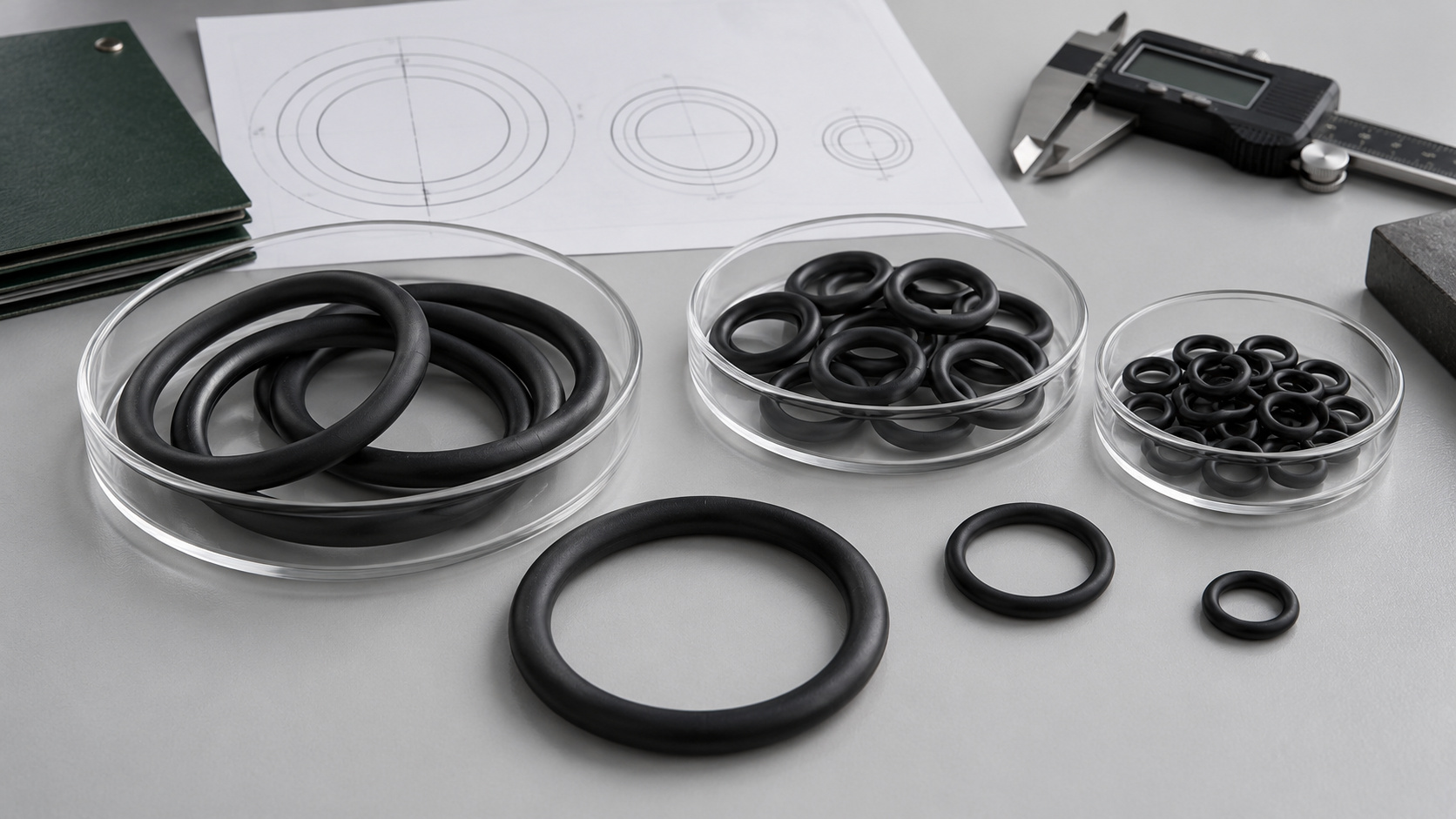



































Earbud Tips: Separate the Silicone Grade from the Moulded Shape
Compare the flange, attachment collar, material specification and any mesh or insert when assessing removable tips for Bluetooth earbuds.
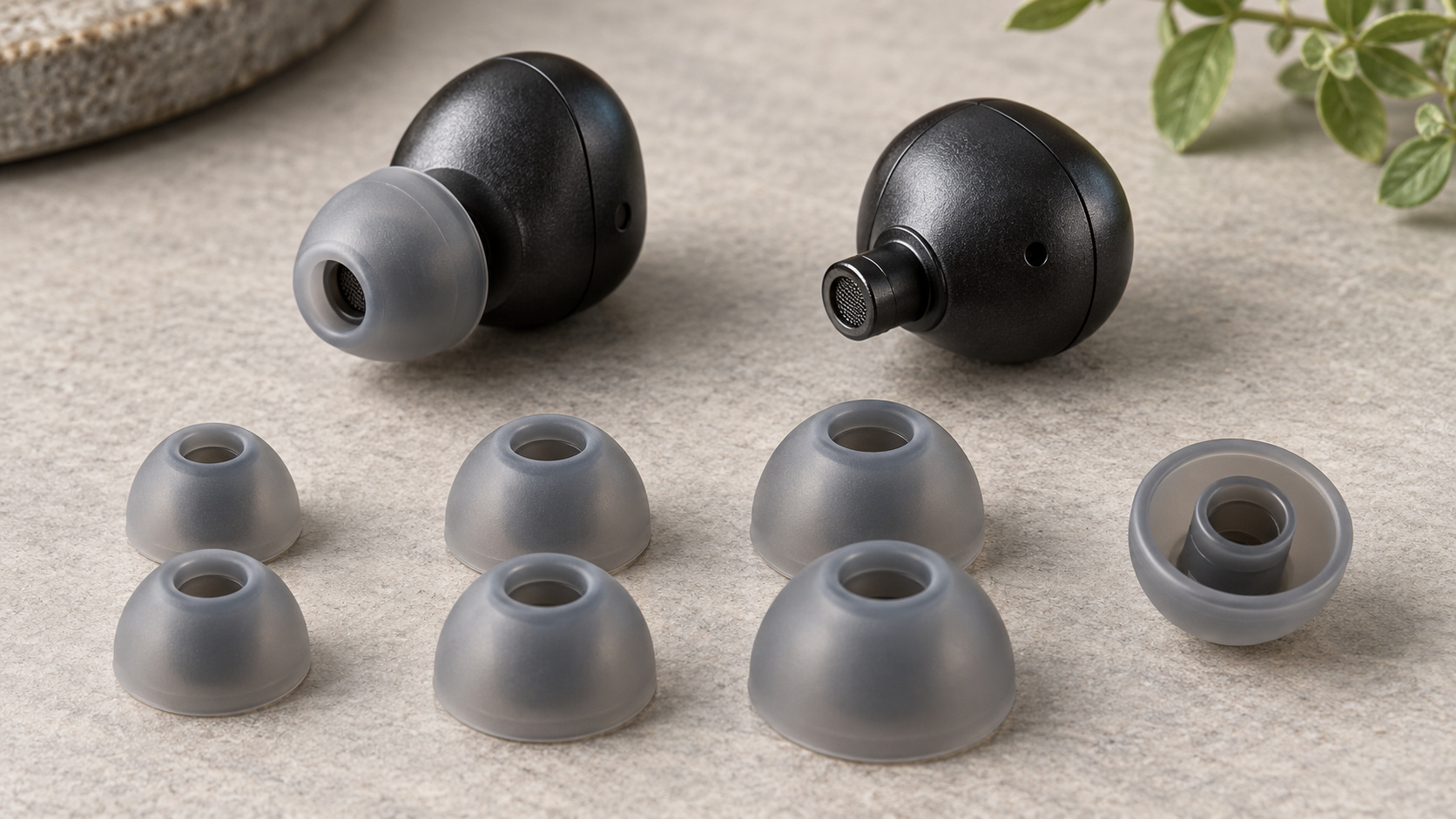
In an earbud quotation, “silicone tips” would leave me with two separate enquiries. What silicone is proposed, and what shape has been moulded from it? I would keep those questions apart when comparing samples. A material name gives no drawing of the attachment collar, while a photograph of a white tip gives no identification of the silicone grade. Both matter when a replacement part is supposed to match a particular earbud.
For a tip with a flexible outer skirt and a central collar, I would begin with a section drawing supplied by the manufacturer. The outside diameter is only one dimension. The skirt's height, the opening through the middle and the collar that attaches to the earbud need their own references. I would want to see where the wall becomes thicker or thinner, rather than judge the whole part by the width of its rounded outline. If a supplier offered several sizes, I would ask which of those features changed between them. The drawings could then be compared with the actual labelled samples.
The attachment deserves a close-up of its own. A circular-looking tip viewed from above may hide a shaped connector underneath. I would ask the supplier to show the proposed earbud connector alongside the tip's mating feature. Apple's instructions for its own AirPods Pro, for example, describe aligning a tip with an oval connector. That is a detail of that product, not a reason to assume another tip uses the same fitting. For the offered earbuds, I would follow the corresponding attachment instructions when checking the supplied sample, without forcing a part whose fitting had not been confirmed.
Next would come the material specification. Wacker's silicone-rubber guide lists grades with different mechanical properties and identifies hardness measurements separately from properties such as tear resistance. I would ask which grade and finished-part construction the supplier was actually offering. If the quotation included a hardness value, I would want the scale and test method stated with it. Pressing a small sample between my fingers would not provide that measurement. I would keep the material data beside the section drawing, so that a discussion about changing wall thickness did not quietly become a discussion about changing the material as well.
I would also ask whether the tip included another component. A mesh, a retaining insert or a foam layer needs describing separately if it is part of the proposed design. Apple's ear-tip guidance distinguishes mesh and construction between its own models, illustrating why the general name “ear tip” is not a complete parts description. For an unrelated product, the supplier needs to explain its own construction. I would mark the relevant feature on the sample photograph and ask whether it was included across all quoted sizes.
For the moulded finish, I would look closely at the skirt edge, the central opening and the attachment feature, using photographs taken from both sides. Any visible line or excess material would go back to the supplier for identification against the drawing and agreed finish requirements. I would retain the approved physical samples with their size and model references. A later change to the grade, moulded section or inserted component could then be reviewed against those same references, together with whatever fit and acoustic assessment the complete earbud required.
Share the product, specifications, quantity and destination to discuss sourcing options.