


































Following a Patio Furniture Set Through Linhai’s Supplier Network
Start with Linhai’s outdoor-furniture industry, then map the quoted frame, woven panels, cushions and final packing to the actual supplied set.
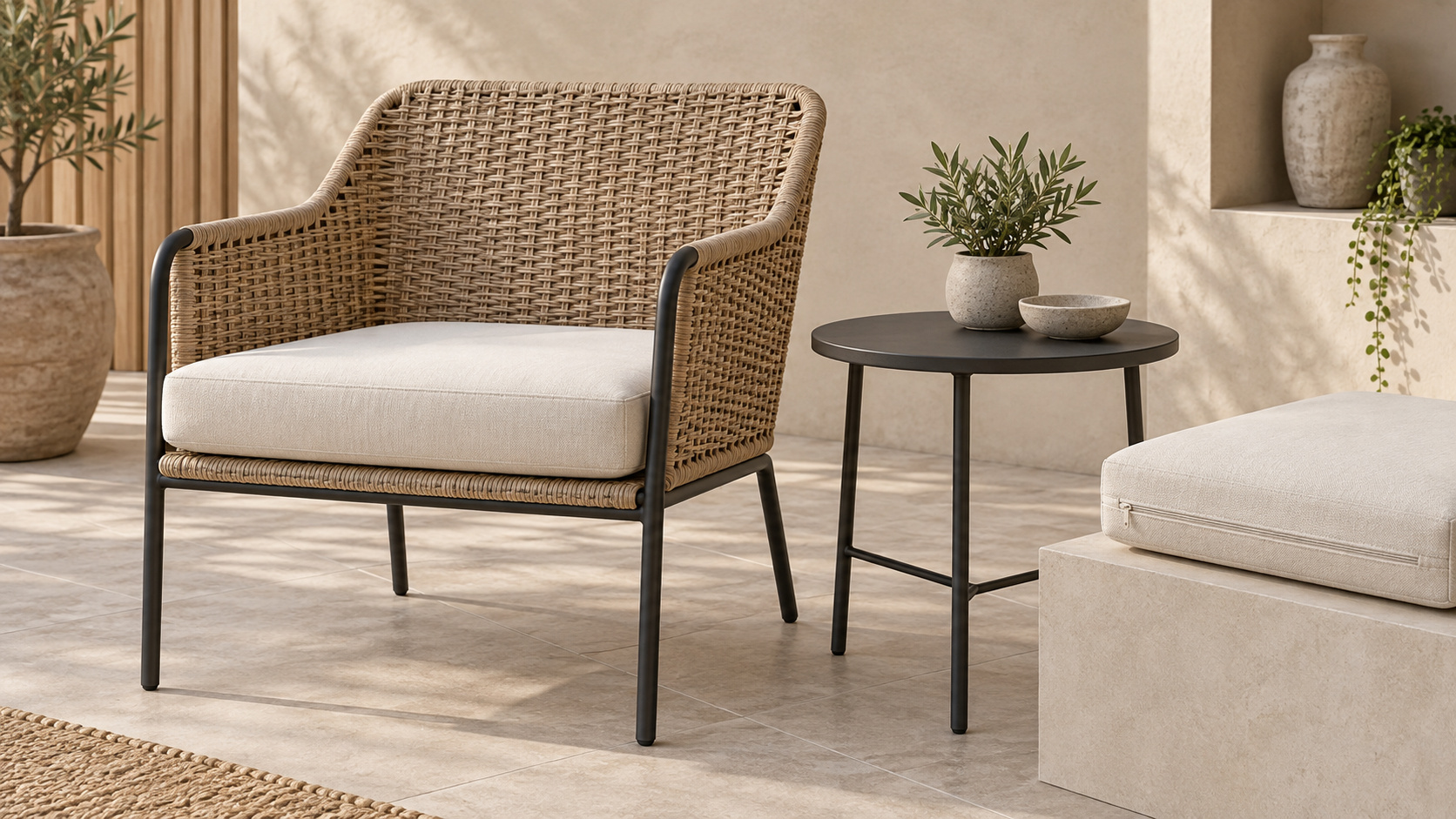
For a patio-furniture set, Linhai would be one place I would investigate for suppliers. Zhejiang's official quality-service platform describes the city's outdoor leisure industry, including outdoor furniture and related products. I would use that regional information to organise enquiries, then ask who would make the particular table and chairs being quoted. A regional industry description would not identify the production route of an individual set.
I would begin with a set-content drawing. Each chair, table and included cushion would have an item reference, with the quantity supplied in one set written beside it. The supplier could then return its offer against those items. I would ask the contact to return the showroom photograph with the included items marked, leaving an umbrella or decorative cushion outside the list unless it was actually being quoted. I would want to know which visible objects belonged to the quoted set before discussing its production arrangement.
For a woven chair, I would ask which business made the frame and where the weaving would take place. The offered frame material and the woven material would have their own descriptions. I would leave a space beside the chair entry for the frame source and another for the weaving location, asking the quoting contact to fill them in. If the weaving was done by another workshop, I would ask who would return the sample from that workshop. The contact could keep its showroom address on the quotation while naming the production places against those separate entries.
The cushion could have another route through the order. I would ask who would make the cover and supply the filling, with the proposed construction identified against the chair reference. I would request a photograph of that cushion on the quoted chair and another showing its own sample reference. If a cover colour changed, I would ask the supplier to return the revised material reference and a view of the proposed combination. I would put the buyer's outdoor-use requirements on the sample brief and ask the responsible specialist which material and assembly assessments were needed, keeping their records with the selected version.
I would put the table on a separate item sheet with its drawing and material description. For a top supplied from another business, I would ask the contact to enter that source beside the top reference and say where it would be joined with the base. The final packing location would have another entry. I would ask who would collect the chair, table and cushion records there before dispatch. A proposed tabletop change could then come back on the table sheet, with the earlier top reference still available for comparison.
I would return the completed item sheets to the quoting contact with the selected set-content drawing, asking it to confirm the listed responsibilities for that order. The supplier would confirm the production and final-packing locations it had offered, along with the accepted sample references. If another cushion workshop or a different frame source was proposed, I would ask for the affected item and revised sample information on that sheet. Linhai would remain the regional starting point for the enquiry; the order file would hold the particular businesses, items and sample references needed to follow the set actually being purchased.
Share the product, specifications, quantity and destination to discuss sourcing options.