


































Write the Film Thickness Separately from the Bag Dimensions
Identify the film-thickness unit and measurement basis, then describe the bag shape and seams on their own drawing.
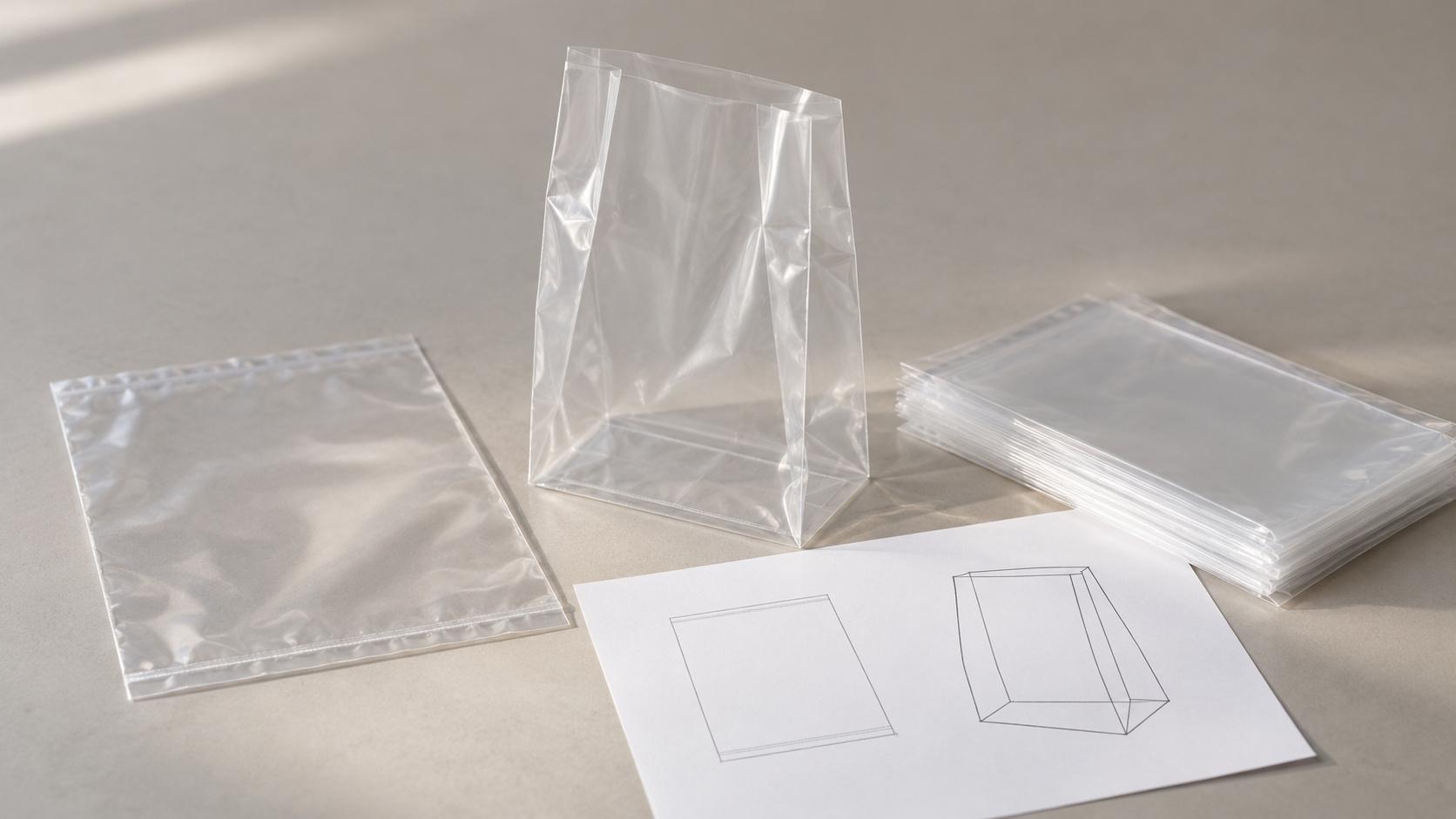
For a plastic bag enquiry, I would leave a separate field for film thickness rather than add another unexplained number after the bag dimensions. The field would include its unit. For an offer in mil, I would add a micrometre column on the comparison sheet and retain the original value beside the conversion. The conversion uses 25.4 micrometres for each mil, since the mil is 0.001 inch. Uline's bag guide uses mil as a thickness unit. I would ask the supplier to write the unit out rather than assume that a short abbreviation meant millimetres.
The measurement basis would be another question. I would ask whether the quoted thickness referred to one film wall and which method the supplier used to assess it. If a measurement record was provided, I would want the sample location identified. A folded side or a seal would need to be distinguished from the flat film area being specified. I would not take a reading across an unspecified folded bag and enter it as the single-wall film thickness without asking what had actually been measured.
Bag dimensions would go on a shape drawing. For a flat bag, I would ask for the width and length directions to be marked, along with the opening and sealed edges. For a bag with a flap, I would put a separate line on the drawing for the flap and ask the supplier which endpoints it used for the quoted length. The buyer could then see whether the quoted bag length included that part. I would use the drawing to discuss the proposed contents and leave the film-thickness field alongside it, with no assumption that a thicker bag would have more usable space.
For a side-gusseted option, I would ask to see the bag both flat and expanded. Uline's product information is an example of a supplier listing width, depth and height separately for that style of bag. Another offer would need its own dimension convention, with the gusset shown on the drawing. I would ask which size the supplier used for the expanded side rather than add a gusset figure to a width from another drawing. A representative pack of the intended contents could be used in the agreed fit review.
For the film description, I would ask the supplier to put the material reference on the sample bag. If it offered a replacement film at the same nominal thickness, I would want a sample of that option beside the first one, with its own reference and declared material information. For a printed bag, I would keep the artwork and the selected printed faces in that option's file as well. If the buyer intended a special use such as direct food contact, I would put that use on the enquiry and ask the responsible specialist to identify the evidence needed for the proposed film and finished bag.
On the comparison sheet, I would keep the film description, the thickness entry and the bag drawing next to the sample reference. The target thickness, agreed variation and assessment method would have separate spaces. For the intended contents, I would ask the responsible specialist to define any required seal or finished-bag assessment and record the agreed conditions with the sample request. I would photograph each offered sample beside its own material reference and put those views next to the two quotation entries. A changed film reference, a different flap length or another thickness could then be discussed against the two actual samples before the buyer selected a version.
Share the product, specifications, quantity and destination to discuss sourcing options.