



































Keep the Original Part Beside a Proposed PCBA Substitute
Ask the assembly supplier to return proposed substitutions against the original BOM entries, with design approval and unpopulated positions clearly recorded.
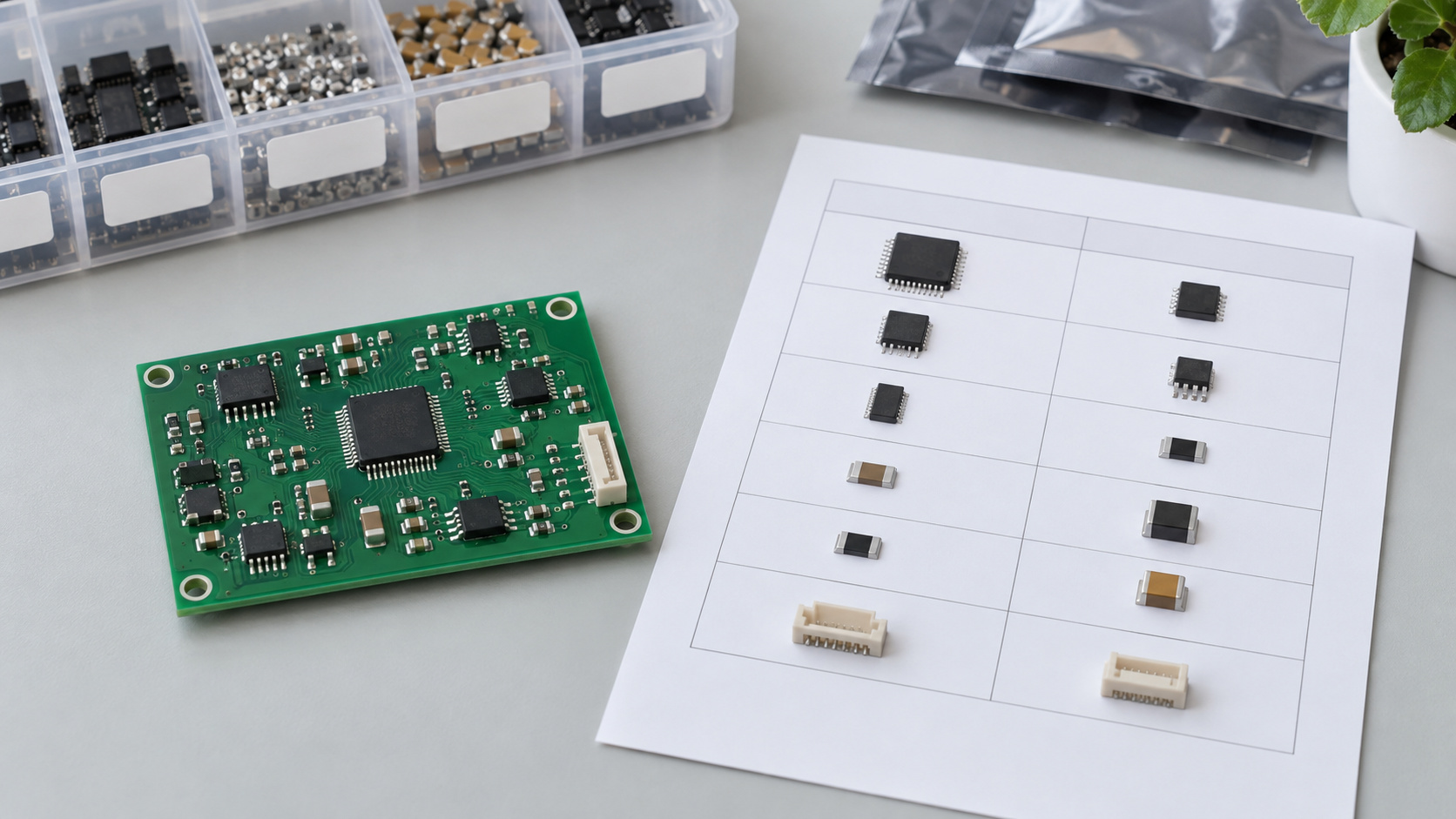
For a PCBA enquiry, I would ask the supplier to add a column for its proposed part beside the submitted BOM entry. I would send a copy of the original BOM with that request and ask for the proposed manufacturer and part number to be entered in the added column. That way, when the reply went to the designer, I could point to the submitted item on the left and the offered item beside it. I would want the designer to see the two parts together before a substitution went into the quoted build.
I would check the BOM headings with the assembly provider before sending it for quotation. For my preparation notes, I would use JLCPCB's published BOM guide as an example and ask whether the submitted file contained the description, designator, package and manufacturer part reference it discusses. I would then send the actual provider's format to the designer, asking for a checked file to be returned for this enquiry. A supplier's stock code could accompany the manufacturer's reference, but I would keep the two labelled separately rather than treat an internal inventory number as the only description of the component.
For a proposed substitute, I would ask which reference designators were affected and request the offered manufacturer's full part number and datasheet. For a row listing several positions, I would ask the supplier to repeat the affected designators next to its offered part. If the proposal covered only some positions, I would ask for them on a separate line. The reply could also say why that part was being proposed, with its quoted quantity and lead time. I would not call the substitute equivalent on that basis. The responsible design engineer would decide what technical comparison and validation were required for the intended circuit.
Positions intended to remain empty would need an explicit record of their own. JLCPCB's component-matching guidance explains that selecting Do Not Place leaves the corresponding designators unpopulated in its process. For another assembly provider, I would agree how that instruction was represented in the returned files. A component omitted because it was unavailable would not become an approved empty position by accident. I would ask the designer to confirm the intended population for the ordered assembly variant.
When the supplier returned the matched parts list, I would keep it beside the submitted BOM and the applicable assembly documents. The engineer's response to each proposed change would stay with the affected entries. I would add a space for the reviewed board revision and the engineer's response, leaving an unanswered proposal open on the sheet. Before requesting the sample, I would send the selected list back and ask the supplier to confirm its reference in the sample-build reply.
In that sample request, I would list the component-identification and assembly records the engineer had asked to receive, so the supplier could confirm them with the build reference. A finished-board photograph could help locate a board position, but it would not be my sole evidence of every fitted part's identity or electrical suitability. If another component change was proposed for the production quantity, I would return to the original-and-proposed comparison before updating the build references. The order file could then show the submitted component, the approved replacement where applicable and the assembly version that the supplier had agreed to deliver.
Share the product, specifications, quantity and destination to discuss sourcing options.